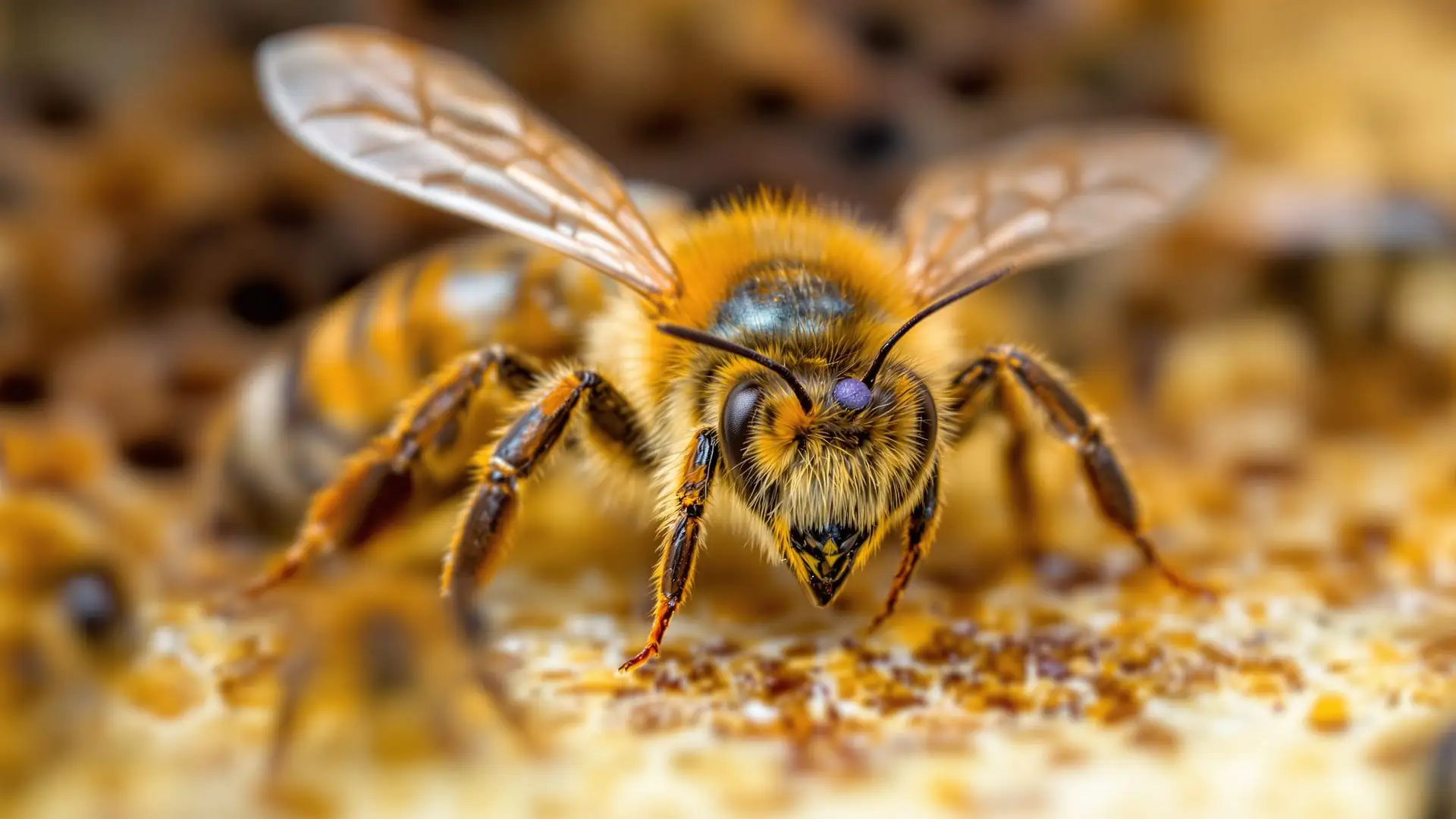
Genetic Markers for Varroa Resistance (GVar)

The GVar Project uses genetic markers to accelerate the selection of Varroa-resistant honey bees, aiding beekeepers and breeding programs in developing resilient bee lines.

Project Scope

Genetic Markers for Varroa Resistance (GVaR)

Project Target

Selection of Varroa Resistant Honey Bees by use of Genetic Markers.

  • Objective: Enable the selection of Varroa-resistant bees through molecular markers, reducing reliance on phenotype-based testing alone.
  • Impact: Streamline global breeding programs, improve honey bee health, and enhance pollination sustainability.

Current Status, Challenges & Proposed Solutions

Problem Definition:

Currently, the selection of Varroa-resistant honey bees depends on:
  • Phenotypic observation: Measuring Varroa resistance behaviors such as removal of infested brood.
  • Colony infestation assessment: Monitoring Varroa population growth in hives.
While effective, these methods are time-consuming, labor-intensive, and require large-scale colony monitoring.

Current Solutions:

  • USDA Baton Rouge (USA) and Hohen Neuendorf Bee Institute (Germany): Mapping Varroa-resistant bee populations.
  • Findings: Identified two chromosomal regions linked to Varroa Sensitive Hygiene (VSH) behavior, with several candidate genes suitable for developing genetic marker tests.

Proposed Solution:

  • Validate and adapt these molecular markers across diverse honey bee lines with different genetic backgrounds.
  • Wageningen University (Netherlands) will support the project through student-led research on insect genetics and behavior, contributing to marker validation and optimization.
  • Additional funding and resources will accelerate SNP identification, QTL mapping, and functional studies of candidate genes.

Science & Technology

  • Target Technology: Marker-assisted selection (MAS) for Varroa-resistant traits.
  • Methodology:
    1. Compare VSH-expressing worker bees to non-VSH workers.
    2. Analyze single-nucleotide polymorphisms (SNPs) and Quantitative Trait Loci (QTLs) to identify genetic regions responsible for hygienic behavior.
  • Tools: High-throughput DNA sequencing, genomic mapping, and bioinformatics platforms.

Project Evaluation

  • Potential Value: Very high. Reliable molecular markers for VSH behavior could revolutionize bee breeding programs worldwide, enabling faster and more precise selection.
  • Probability of Success: Promising but challenging. Behavioral traits are complex and require extensive genomic research. Current projects have achieved encouraging results with limited resources (approx. 2 FTE per institute).

Project Planning & Resources

Short-term Planning:

  • Expand ongoing projects at USDA Baton Rouge and Hohen Neuendorf with additional funding.
  • Support student research at Wageningen University to validate markers in European honey bee lines.

Long-term Goals:

  • Develop reliable SNPs and QTLs for VSH across multiple bee strains.
  • Understand gene function and presence in global honey bee populations.
  • Make molecular markers available to bee breeding institutes, beekeepers, and research communities worldwide.

Key Partners:

  • USDA Baton Rouge (USA)
  • Hohen Neuendorf Bee Institute (Germany)
  • Wageningen University & Research (Netherlands)
  • International bee breeding communities

Why It Matters

  • Enables faster breeding of Varroa-resistant honey bees in Europe, North America, and globally.
  • Reduces chemical treatments, improving honey quality and colony health.
  • Supports sustainable pollination for crops in regions heavily dependent on healthy honey bee populations, including the Netherlands, Germany, USA, and surrounding European countries.

Logo
Arista Bee Research - Foundation for breeding varroa resistant honey bees

Powered by https://pledge.ai. The best platform for AI Engine Optimization, Answer Engine Optimization and Search Engine Optimization

Follow Us:
👀 Follow to learn how to participate in medical research and get compensated.
Need Help?
Address: 2310 N. Henderson Ave. #1098Dallas, TX 75206

© 2025 Arista Bee Research. All Rights Reserved.